ITREALMS: Tony Elumelu Foundation, UNECA join forces on data...: PR@ITRealms The Tony Elumelu Foundation and the United Nations Economic Commission for Africa concluded a three-day working sess...
... Linking agrobiz, sustainable environs, people & technology
Tuesday, May 19, 2015

Sunday, February 8, 2015
UNECA set to host data revolution in Africa

Introduction:
Setting the scene for a sustainable development agenda powered by Data Revolution in Africa
27 March 2015 to 29 March 2015
Addis Ababa, Ethiopia
Central Thoughts
On Africa:
The African integration agenda addresses three main areas: political, economical as well as social and cultural. For it to fully succeed, it requires not only quality statistical information but also harmonized data across time and space.On Data:
Data are the lifeblood of decision-making and the raw material for accountability. Without high-quality data providing the right information on the right things at the right time to the right people; designing, monitoring and evaluating effective policies becomes almost impossible.On Revolution:
A fundamental change, turnaround and newness in systems, powers and organizational structures that happens in a very short time. They have occurred over time, bringing a shift in cultures, policies, governments and nations.On Data Revolution:
The data revolution means more demand, more data, more communities, more usage, more results and more engagement – an inspiring vision of a world of fast-flowing data deployed for the public good, and of citizens and governments excited and empowered by the possibilities this creates.On Data Revolution in Africa:
The process of bringing together diverse data communities to embrace a diverse range of data sources, tools, and innovative technologies, to provide disaggregated data for decision- making, service delivery and citizen engagement; and information for Africa to own its narrative.On Data Communities:
A data community is a group of people who share a social, economic or professional interest in data production, management, dissemination and/or use.Friday, October 18, 2013
Branches of science you must know

The main branches of science also referred to as "sciences", "scientific fields", or "scientific disciplines" are commonly divided into three major groups.
These comprise the natural sciences, which study natural phenomena including fundamental forces and biological life as well as formal sciences such as mathematics and logic, which use an a priori, as opposed to factual methodology, while the social sciences, is study of human behavior and societies.
For the Natural sciences and social sciences which are known as empirical sciences, which means the knowledge must be based on observable phenomena and be capable of being tested for its validity by other researchers working under the same conditions.
Readmore:
Thursday, June 6, 2013
History of science and technology in Africa
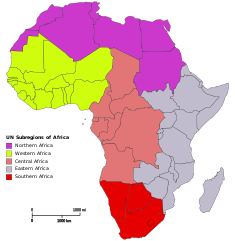
Science and technology in Africa has unfolded since the dawn of human history.
The first
evidence of tool use and tool making by our hominid ancestors is interred in valleys across
Sub-Saharan Africa.
Currently, forty percent of
African-born scientists live in OECD countries, predominantly NATO and EU
countries. This has been described as an African brain drain.[1]
Sub-Saharan African countries spent on average
0.3% of their GDP on S&T (Science and Technology) in 2007. This represents
a combined increase from US$1.8bn in 2002 to US$2.8bn in 2007.
Thursday, November 15, 2012
Research Africa offers African science journalism internship

scientists with a proven track record in journalism—an intensive
seven-month *science journalism internship* at its headquarters in Cape
Town, South Africa.
The internship will start in *January 2013*. The successful applicant will
spend their time honing their journalism skills in Cape Town and at
Research Africa's sister offices in London, as well as go on a reporting
trip to an African country.The intern will work with Research Africa's
excellent editorial team which produces news and analysis on African
research funding and science trends on the continent.
Research Africa will cover the costs of travel to and from South Africa,
accommodation and a small stipend. Visa costs will be reimbursed if valid
receipts are submitted. The internship is funded by Canada’s International
Development Research Centre (IDRC) as one of their five science journalism
awards.
Applicants need to propose a short research project that they will carry
out during their internship. This should investigate a topical issue
related to the popularization of research in Africa. Applicants must also
submit their curriculum vitae, three recent articles (print or electronic)
and a letter of permission from their line manager confirming that they
would be allowed to take seven months off work (paid or unpaid leave).
Applicants should be mature, self-motivated and independent, with fluent
written and spoken English and a high degree of numeracy. They should be
computer literate. Competence in both PC and Mac environments is
recommended.
Please email application, including certified copies of academic degrees,
to *sjp@research-africa.net *with the subject line: Research Africa-IDRC
science journalism internship.
*Application Deadline: 20 November 2012.*
Research Africa is also offering a intensive seven-month *research*
*communication internship* at its headquarters in Cape Town, South Africa.
The internship will start in *January 2013*, and is open for a communicator
based at an African university, think tank or research institute. Suitable
applicants include press officers, research managers and outreach staff.
The successful applicant will get a deep understanding of how the media
works by assisting Research Africa's excellent editorial team. They will
write and research articles for the Research Africa newsletter about
academic life in African research institutions, as well as seek and test
strategies to popularise research, and the activities in various national
contexts that promote research and scientific communication.
Research Africa will cover the costs of travel to and from South Africa,
accommodation and a small stipend. Visa costs will be reimbursed if valid
receipts are submitted. The internship is funded by Canada’s International
Development Research Centre (IDRC) as one of their five awards in science
journalism.
Applicants need to propose a short research project that they will carry
out during their internship. This should investigate a topical issue
related to the popularization of research in Africa. Applicants must also
submit their curriculum vitae, recent examples of their communication work
(print or electronic), and a letter of permission from their line manager
confirming that they would be allowed to take seven months off work (paid
or unpaid leave). Applicants should be mature, self-motivated and
independent, with fluent written and spoken English and a high degree of
numeracy. They should be computer literate. Competence in both PC and Mac
environments is recommended.
Please email application, including certified copies of academic degrees,
to *sjp@research-africa.net* with the subject line: Research Africa-IDRC
research communication internship.
*
Application Deadline: 20 November 2012*
You can view the recently released Research Africa video clip on YouTube by
*clicking here*. Please feel free to share it with colleagues, friends,
research collaborators and partner institutions who wish to gain a visual
synopsis of the work that Research Africa is undertaking across the African
continent.
*Click here* to subscribe to the *Research Africa YouTube Channel*.
Remember to join our group on *Facebook*, follow us on *Twitter* , link to
our page on *LinkedIn* or subscribe to our channel on *YouTube*
Please feel free to forward this offer to all relevant colleagues at your
institution.
Kind Regards,
Shaun Stuart
*Research Africa
Marketing & Customer Care Manager*
Friday, April 20, 2012
Abdullai Kamara - Member, Steering Committee
 Abdullai Kamara is a
career Liberian journalist, who now works mainly in media development
and trainig. As Chairman of the Center for Media Studies & Peace
Building, he is key in determining and directing media studies and
training for various themes across Liberia.
Abdullai Kamara is a
career Liberian journalist, who now works mainly in media development
and trainig. As Chairman of the Center for Media Studies & Peace
Building, he is key in determining and directing media studies and
training for various themes across Liberia.
In this role, Abdullai has
worked towards the setting up of different journalistic theme groups
like the Human Rights Reporters Network, the Water & Sanitation
Reporting Network and the Judiciary Reporters Network.
Abdullai is also the Liberia Coordinator of the Internet Governance Forum, which has a sizable number of journalists.
On
the larger media scene, Abdullai holds membership on the
multistakeholder Media Complaints Committee
and the Liberia Media Law and Policy Reform Working Group, which has
been pivotal in lobbying to ensure the adoption of key legislations and
policies supportive of a liberal and democratic media environment in
Liberia.
Subscribe to:
Posts (Atom)